Brady Emergency Care 10th Edition Workbook

Table of Contents PART 1 Standard Preparatory Standard Public Health 1. Emergency Medical Care Systems, Research, and Public Health 2. Workforce Safety and Wellness of the EMT 3. Medical, Legal, and Ethical Issues 4.
Brady Emergency Care 12th Edition. Chapter 1 PDF FlipBook PowerPoint Print Images: Chapter 2 PDF FlipBook PowerPoint Print Images: Chapter 3.
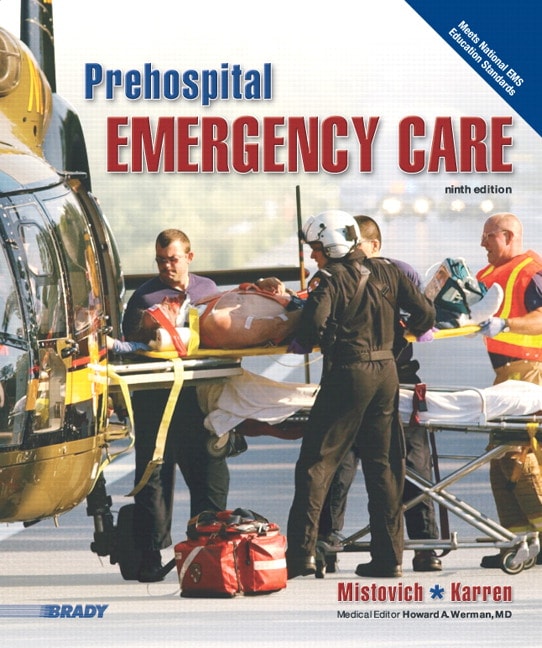
Workbook for Prehospital Emergency Care. MyLab BRADY with Pearson eText. For Prehospital Emergency Care, 10th Edition By Joseph J. Mistovich, Keith J Karren. Emergency Medical Responder: First on Scene. Prehospital Emergency Care (10th Edition). And an Emergency Medical Responder Workbook and.
Documentation 5. Communication 6. Lifting and Moving Patients PART 2 Standard Anatomy and Physiology Standard Medical Terminology 7.
Anatomy, Physiology, and Medical Terminology PART 3 Standard Pathophysiology 8. Pathophysiology PART 4 Standard Life Span Development 9. Life Span Development PART 5 Standard Airway Management, Respiration, and Artificial Ventilation 10.
Airway Management, Artificial Ventilation, and Oxygenation PART 6 Standard Assessment 11. Baseline Vital Signs, Monitoring Devices, and History Taking 12.
Scene Size-Up 13. Patient Assessment PART 7 Standard Pharmacology 14.
Pharmacology and Medication Administration PART 8 Standard Shock and Resuscitation 15. Shock and Resuscitation PART 9 Standard Medicine 16. Respiratory Emergencies 17. Cardiovascular Emergencies 18. Altered Mental Status, Stroke, and Headache 19. Seizures and Syncope 20. Acute Diabetic Emergencies 21.
Mission
Anaphylactic Reactions 22. Toxicologic Emergencies 23.
Abdominal, Gynecologic, Genitourinary, and Renal Emergencies 24. Environmental Emergencies 25. Submersion Incidents: Drowning and Diving Emergencies 26.
Behavioral Emergencies PART 10 Standard Trauma 27. Trauma Overview: The Trauma Patient and the Trauma System 28. Bleeding and Soft Tissue Trauma 29. Musculoskeletal Trauma 31.
Head Trauma 32. Spinal Column and Spinal Cord Trauma 33. Matthew Tenney. Eye, Face, and Neck Trauma 34. Chest Trauma 35. Abdominal and Genitourinary Trauma 36. Multisystem Trauma and Trauma in Special Patient Populations PART 11 Standard Special Patient Populations 37. Obstetrics and Care of the Newborn 38.
Pediatrics 39. Geriatrics 40. Patients with Special Challenges 41. The Returning Combat Veteran PART 12 Standard EMS Operations 42. Ambulance Operations and Air Medical Response 43. Gaining Access and Patient Extrication 44.
Hazardous Materials 45. Multiple-Casualty Incidents and Incident Management 46. EMS Response to Terrorism Involving Weapons of Mass Destruction Appendix 1. ALS-Assist Skills Appendix 2. Advanced Airway Management Answer Key Glossary Index.
Description For courses in Emergency Medical Technician Training, Emergency Medical Services. Emergency Care, Twelfth Edition, has set the standard for EMT training for over 30 years. Updated with the latest research and developments in emergency medical services, this edition meets the 2010 American Heart Association guidelines for CPR and ECC, providing all the practical information students need to succeed in the classroom and in the field.
Using the National EMS Education Standards as a foundation, this edition goes beyond the Standards to provide the most current, accurate reflection of EMS practice today. Getting students to think like an EMT, the text integrates scientific principles in a way that's easy to understand, and a host of critical thinking features–including a new chapter, “Critical Thinking and Decision Making,”–helps students learn key concepts while getting a dose of the reality of being an EMT. This product is an alternate version of. For courses in Emergency Medical Technician Training, Emergency Medical Services. Emergency Care, Twelfth Edition, has set the standard for EMT training for over 30 years. Updated with the latest research and developments in emergency medical services, this edition meets the 2010 American Heart Association guidelines for CPR and ECC, providing all the practical information students need to succeed in the classroom and in the field. Using the National EMS Education Standards as a foundation, this edition goes beyond the Standards to provide the most current, accurate reflection of EMS practice today.
Getting students to think like an EMT, the text integrates scientific principles in a way that's easy to understand, and a host of critical thinking features–including a new chapter, “Critical Thinking and Decision Making,”–helps students learn key concepts while getting a dose of the reality of being an EMT. Hallmark Features: A host of boxed features and pedagogical tools–help students navigate and learn often complex concepts and procedures. Thoroughly updated–to address the latest guidelines. The chapters in the Airway Management, Respiration, and Artificial Ventilation section–and throughout the text–have been updated to conform to the latest American Heart Association guidelines. All chapters in the Patient Assessment section–and throughout the text–have been revised to use current terminology for the steps of the assessment and the history of an illness. Appendix A, “Basic Cardiac Life Support Review,” has been updated to reflect current AHA guidelines.
Chapter 38, “EMS Operations,” has been revised to list the equipment required on an ambulance as recommended by the following: American College of Surgeons, Committee on Trauma; American College of Emergency Physicians; National Association of EMS Physicians; American Academy of pediatrics; and 2009 Required Equipment for Basic Life Support Ambulances. New Chapters and sections–offer current, comprehensive coverage.
Chapter 1, “Introduction to Emergency Medical Services and the Health Care System,” contains a new section on the role of research in EMS (including its influence on the development of evidence-based practices), as well as a new section on the EMS role in Public Health. Chapter 4, “Medical Terminology and Anatomy and Physiology,” now begins with a new section on medical terminology.
Many new high-quality illustrations accompany the text on anatomy and physiology. A new Chapter 6, “Principles of Pathophysiology,” reflects the emphasis on pathophysiology in the new EMS Standards, rather than being a full course in pathophysiology.
Chapter 8, “Airway Management,” is devoted entirely to airway issues. Chapter 9, “Respiration and Artificial Ventilation,” places an emphasis on cardiopulmonary pathophysiology. A new section on CPAP/BiPAP in Chapter 9 has been added to the more traditional techniques for assisting respiration and ventilation. A new Chapter 16, “Critical Thinking and Decision Making,” teaches how the EMT can apply lessons from experienced physicians to learn how to use critical thinking/decision-making skills to reach a field diagnosis. Chapter 24, “Abdominal Pain and Discomfort,” includes a new section on history specific to female patients. A new Chapter 26, “Hematology and Nephrology,” focuses on blood disorders (hematology), especially anemia, sickle cell anemia, and kidney/renal disorders (nephrology)–focusing on renal failure, end-stage renal disease, and dialysis. Chapter 28, “Soft-Tissue Trauma,” contains a new section on blast injuries, based on current CDC guidelines.
A section on genital trauma as also been added to this chapter. Chapter 37, “Patients with Special Challenges,” has a new opening section/overview of patients with special challenges, including disability, terminal illness, obesity, and homelessness/poverty.

A new section on abuse and neglect and a new section on autism have been added to chapter 37. A major new section in Chapter 40 covers how to operate safely at the scene of a highway incident.