Chevy Manual Brake Master Cylinder
Chevy Bel Air, 210 & 150 Brake Master Cylinders And Chevy Bel Air Master Cylinder Replacement Parts For 1955, 56, 57 Chevys. Chevrolet Parts Parts Category: Brakes» Master Cylinder Chevs of the 40s is the World's Most Complete Supplier of 1937-1954 Chevrolet Classic Restoration Chevy. Sep 03, 2014 Manual Brake Master Cylinder Help. I just converted my 51 chevy truck to 4 wheel disc and used a 69 vette master cylinder for manual disc brakes.
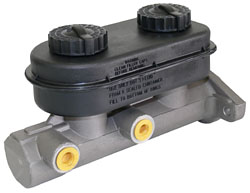
A power master cylinder is different from a manual master cylinder. I went through this on my 64 Impala.
Look at where the rod will press into the bore. On a power master cylinder, there is a small indent for the ball from the booster to press on. A manual master cylinder has a deeper indent for the rod from the pedal.
Wilwood Manual Brake Master Cylinder
Either will work but it is not really safe.It is best to get the correct part. You want to be safe when it comes to brakes. I used a mid 70's Corvette manual master cylinder with a 1 inch bore on my 64 Impala when I converted to front disc brakes.
During the 1960’s the automotive industry evolved quickly, and started setting standards that are still common in modern-day car manufacturing. Brakes were an area of concern as the horsepower wars began in the late ’50s, and continued to climb each and every year. The Corvette was among those high-horsepower machines, and Chevrolet introduced disc brakes in 1965. Corvettes with the power brake option in 1965 and 1966 were equipped with dual reservoir master cylinders, and by 1967 all Corvettes had the updated master cylinder design as standard equipment. The 1964 coupe that we’re wrenching on has a completely stock braking system, consisting of four-wheel drums and a single pot master cylinder.
The plan is to swap the old-style master cylinder for a 1967 dual reservoir master cylinder, which is a much safer design. Braking safety is always a concern when driving a vintage car on today’s highways. As a responsible driver, you likely keep a safe distance from traffic, but there are many situations where a panic stop can occur. In these situations, a rotten brake hose, a hairline crack in a hard brake line or even a leaking wheel cylinder can cause sudden loss of brake fluid. With a single pot master cylinder, all of the brake fluid will eventually make its way out of the reservoir, meaning you will have no braking power at all. This is obviously not ideal, so as a safety measure, we’re upgrading our braking system with a dual reservoir master cylinder, using a kit from Zip Products, Inc. The kit we purchased (PN DB-503) contains all of the items necessary to make the swap from a single to a dual master cylinder and comes in right at $300.
It includes a 1967 Corvette master cylinder, a new hard line to the front distribution block and a new hard line to the rear distribution block. Also included in the kit are the necessary distribution blocks, a 1967-style proportioning valve, and the mounting bracket for the proportioning valve. The only parts we had to buy in addition to the kit were the bench bleeding kit, the AMSOIL brake fluid and one adapter fitting, which we’ll explain in the captions. The install took us a few evenings in the shop, and required basic hand tools. It’s important to note that removing the stock front-to-rear hard brake line is quite a task with the body mounted to the frame, as the line is mounted on top of the framerail. Installing a new line in the same route as the old one is nearly impossible, so we suggest an alternate route unless you like the idea of lifting the body off the frame for a simple brake line install we didn’t think so.

Mustang Manual Brake Master Cylinder
Other than routing the brake lines, the Zip Products dual master cylinder conversion kit was a simple bolt-on affair, and it gave our 1964 Corvette a little more braking power and a lot more safety.